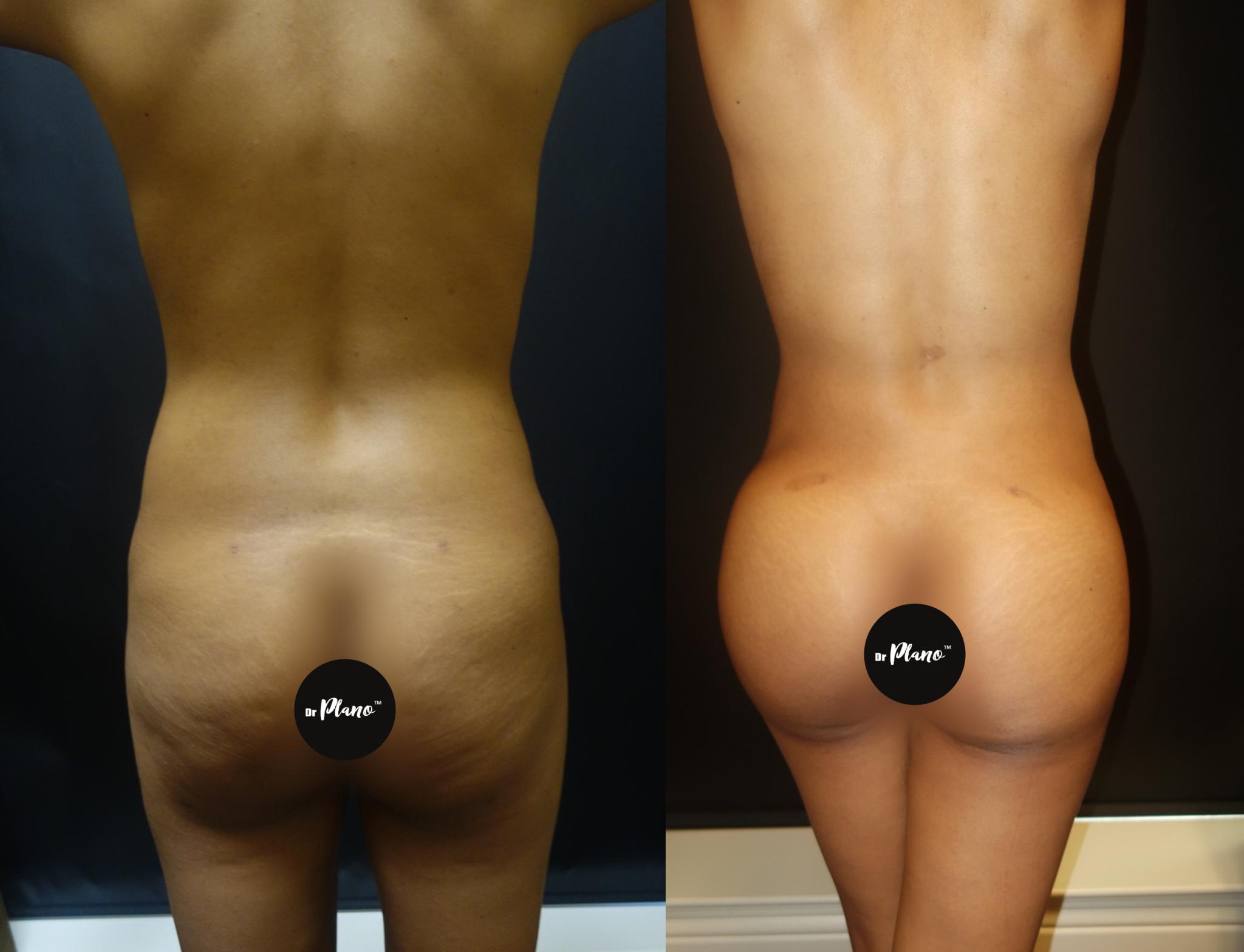
Butt Implants in Plano
Butt Implants Plano, TX: Advanced Gluteal Augmentation
What are Butt implants ?
Butt implants are a specialized form of cosmetic surgery that involves the surgical placement of highly durable, solid silicone cohesive gel implants within the buttocks. This procedure is structurally designed to enhance the shape, size, projection, and overall silhouette of the gluteal region. Gluteal augmentation can be utilized for both body contouring aesthetics and reconstructive purposes.
During the surgical procedure, a discreet incision is strategically placed within the natural crease of the upper gluteal fold (between the buttocks), where scars can be easily hidden. This incision provides precise access for the surgeon to create a pocket either within or under the gluteus maximus muscle to secure the silicone implants. After exact placement, the incisions are meticulously closed with deep surgical sutures and supported with a protective post-operative dressing.
Unlike breast implants, buttock implants are constructed exclusively from solid, ultra-cohesive silicone gel or high-density silicone elastomers. There are no saline-filled gluteal implants, as the immense physical pressure exerted on the gluteal region from sitting and moving requires a solid, rupture-proof medical material that retains its structural integrity over time.
Why Consider Butt Augmentation Surgery?
Choosing to undergo buttock augmentation is a highly personal decision that should be made thoughtfully under the guidance of an expert, board-certified plastic surgeon. Patients across North Texas seek out this body contouring solution for several key reasons:
Correcting Genetic Flattening: Factors such as genetics, natural body chemistry, and aging can cause the buttocks to appear flat, square, or deflated. Gluteal implants restore a fuller, projection-rich, and youthful appearance.
Balancing Body Proportions: Many individuals feel their lower body is disproportionately small or lacks curves compared to their torso. Implants provide the immediate volume and projecting contours needed to establish a balanced, harmonious hourglass silhouette.
Massive Weight Loss Rejuvenation: Drastic weight fluctuations often leave the gluteal area looking sagging or hollowed out. Augmentation helps lift and structurally firm the area by replenishing lost volume.
Correcting Gluteal Asymmetry: Whether caused by congenital developments, trauma, or medical conditions, uneven or asymmetrical buttocks can be precisely balanced through custom-sized implants for a uniform appearance.
Who is an Ideal Candidate for Gluteal Implants?
An ideal candidate for gluteal implants is an adult who desires a significant, permanent increase in the size, projection, and firmness of their buttocks. You may be an excellent candidate if you meet the following clinical criteria:
Adequate Local Anatomy: Unlike a Brazilian Butt Lift (BBL) which requires abundant donor fat, butt implants are the premier choice for lean, athletic, or naturally thin patients who lack the excess fat required for fat grafting.
Excellent Overall Health: Candidates must be non-smokers (or willing to quit weeks before and after surgery) and free of medical conditions that impair healing, such as uncontrolled diabetes or severe cardiovascular issues.
Realistic Expectations: Ideal patients understand that while gluteal implants offer dramatic structural enhancement, they require a committed, disciplined post-operative recovery protocol.
What are the Benefits of Buttock Augmentation?
Immediate, High-Definition Volume: Delivers immediate roundness and significant projection that cannot be achieved through diet or gluteal exercise alone.
No Donor Fat Required: Provides a predictable, dramatic body contouring solution for slender patients who do not qualify for a traditional BBL.
Long-Lasting Structural Results: Unlike fat transfer, where a percentage of re-injected fat cells may be naturally reabsorbed by the body, silicone gluteal implants offer permanent, stable volume.
Enhanced Wardrobe Confidence: Dramatically improves how clothing, swimwear, and athletic attire fit, significantly boosting self-esteem and body image.
Are There Any Potential Risks Associated with Gluteal Implants?
As with any major surgical body contouring procedure, it is crucial to review all potential risks with a board-certified plastic surgeon prior to scheduling surgery. Potential complications can include:
Implant displacement or migration
Capsular contracture (firming of the tissue pocket around the implant)
Seroma (fluid accumulation) or hematoma
Incision opening (dehiscence) due to tension in the gluteal cleft
Infection or adverse anesthesia reactions
Choosing an experienced surgeon operating out of an accredited, state-of-the-art surgical facility drastically minimizes these clinical risks.
How Much Do Butt Implants Cost in Texas?
The cost of a butt implant procedure varies significantly based on the custom size and profile of the cohesive silicone implants utilized, the complexity of the patient’s anatomy, and the surgeon’s advanced experience level.
In the competitive Texas market, standard comprehensive pricing for professional gluteal implant surgery typically ranges from $7,000 to $13,000+. This investment generally encompasses the surgeon’s fees, high-density implant materials, advanced operating room fees, anesthesia fees, and all essential post-operative follow-up visits. Flexible medical financing options (such as CareCredit and Alphaeon Credit) are widely available to help make the procedure fit your lifestyle budget.
What is recovery like after a Butt Implant Surgery?
Recovering from a gluteal implant procedure requires a specialized, highly strict protocol to protect the newly created tissue pockets and ensure optimal incision healing:
The No-Sitting Rule: To prevent implant shifting and incision separation, patients must avoid sitting directly on their buttocks or sleeping flat on their backs for at least 2 to 3 weeks following surgery. You will need to sleep on your stomach or sides.
Specialized Post-Op Support: When sitting is absolutely unavoidable after the initial healing phase, a specialized BBL recovery pillow must be placed under your thighs to completely elevate the buttocks and relieve direct pressure.
Compression Garments: Patients are required to wear a medical-grade compression garment around the clock for 4 to 6 weeks to minimize swelling, support the new contours, and facilitate skin contraction.
Activity Restrictions: While light walking is encouraged immediately to promote circulation, strenuous exercise, heavy lifting, and squats must be entirely avoided for a minimum of 6 to 8 weeks. Most patients can return to non-strenuous desk work within 2 to 3 weeks.
What should I do before a Butt Implant procedure?
Proper surgical preparation is essential for a smooth operative experience and a safe recovery:
Schedule a Comprehensive Consultation: Meet with your plastic surgeon to evaluate your anatomical goals, measure your frame, and select the ideal implant volume.
Complete Clinical Testing: Complete all required pre-operative medical evaluations, including targeted blood panels or an EKG if recommended.
Adjust Medications: Pause the use of aspirin, anti-inflammatory drugs, and specific herbal supplements that can thin the blood and elevate bleeding risks, under your doctor’s strict guidance.
Prepare Your Recovery Station: Set up your home with recovery essentials prior to surgery, including stomach-sleeping pillows, a thigh-support pillow, loose-fitting clothing, and your prescribed post-op medications.
How Long Do the Results Last After a Butt Implant Procedure?
Silicone buttock implants are structurally designed to be long-lasting and do not have a set expiration date. Because they are composed of stable, solid medical-grade silicone elastomers, they cannot leak or deflate.
To preserve your high-definition body contouring results for decades, it is highly recommended to maintain a stable weight, follow a balanced lifestyle, and attend your scheduled long-term post-operative evaluations. While the implants themselves are permanent, your natural skin and surrounding tissues will continue to experience normal aging over time.
Disclaimer: This article is for informational purposes only and should not be taken as medical advice. Consult your doctor for specific questions about your individual health, diagnosis, treatment and recovery timeline.
Our Gallery